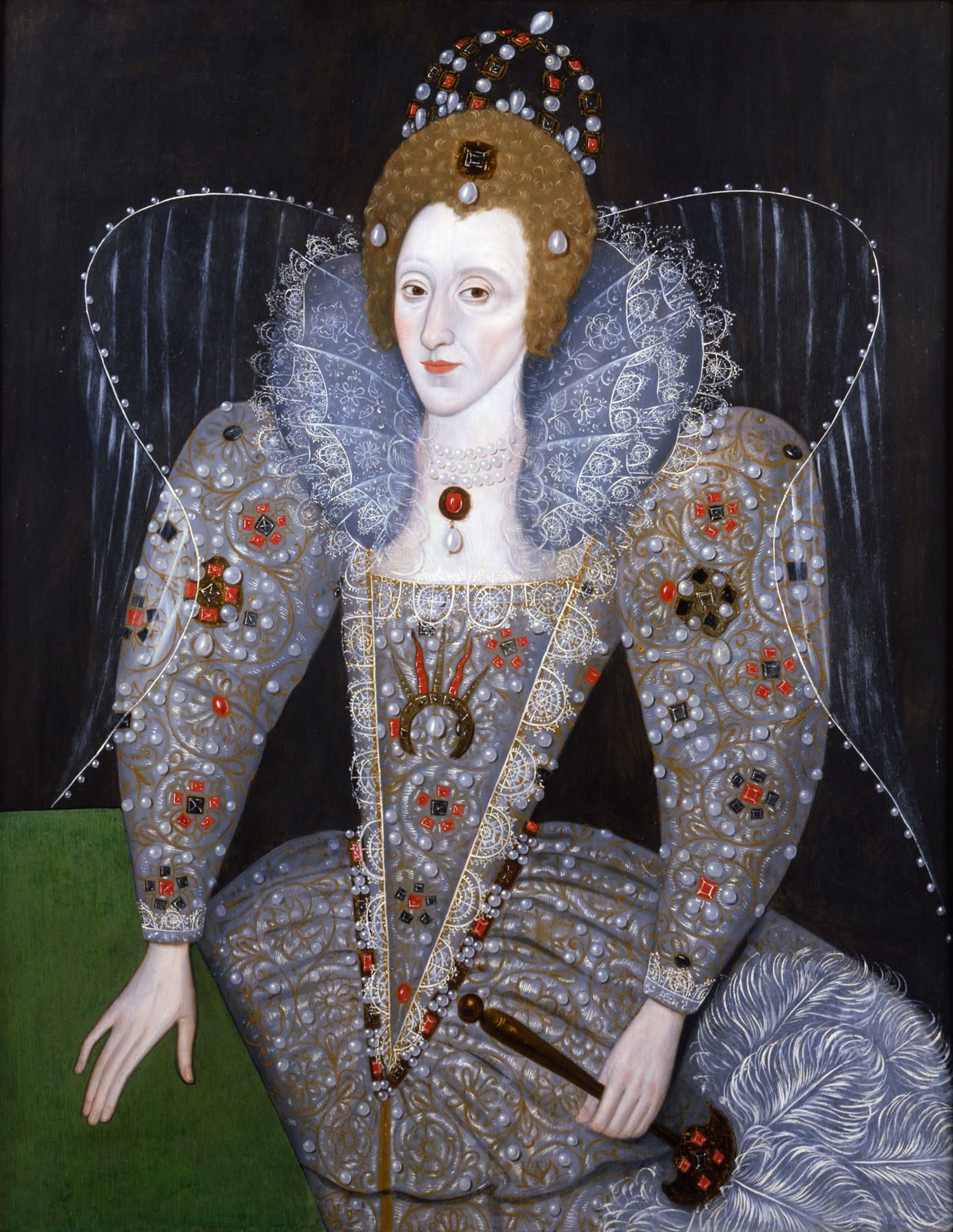
This portrait was painted towards the end of the long reign of Elizabeth I (1533-1603), when she would have been in her late 50s.
She is presented as an ageless symbol of the nation, with her face based on a pattern made when she was younger. Tudor portraiture relied on a rich layering of signs and symbols that were designed to be ‘read’ by the viewer.
Elizabeth wears an open-worked crown representing her sovereignty, and beneath it is the great central diamond known as the ‘Mirror of Portugal’. She holds an ostrich feather fan and her dress is decorated with pearls, symbols of purity.
On her bodice is a jewel in the form of a moon, evoking Diana, goddess of the hunt and of chastity. Although Elizabeth received many proposals of marriage, she remained single and was known as the ‘Virgin Queen’.
Many portraits were produced of Elizabeth I and owning and displaying a portrait such as this would have been a way to publicly demonstrate loyalty to the Queen.